Violet butterwort
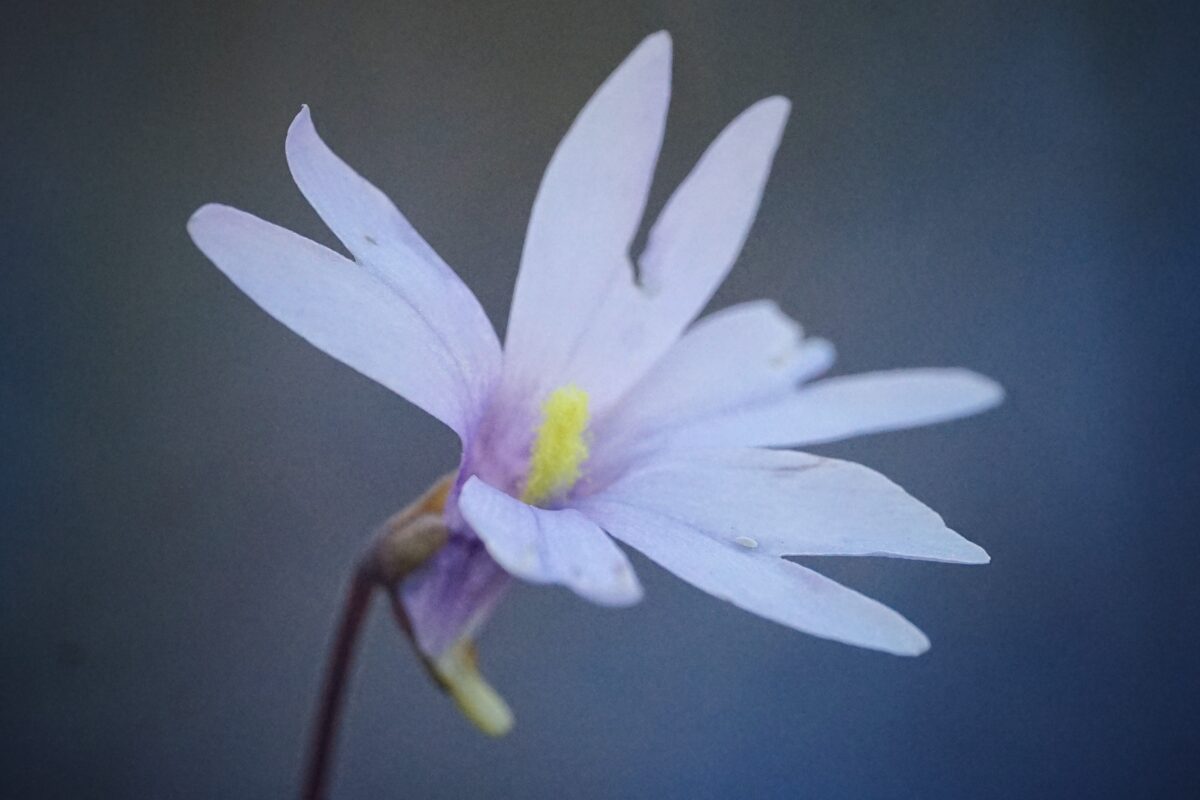
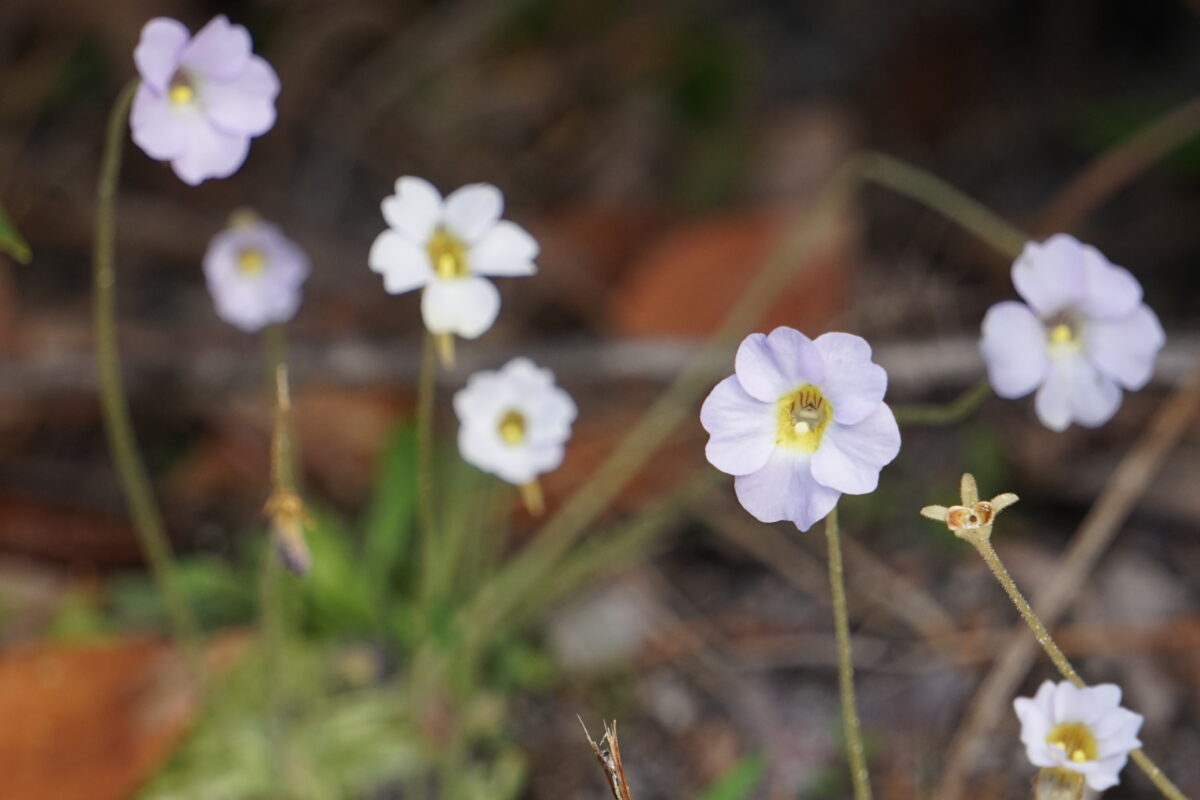
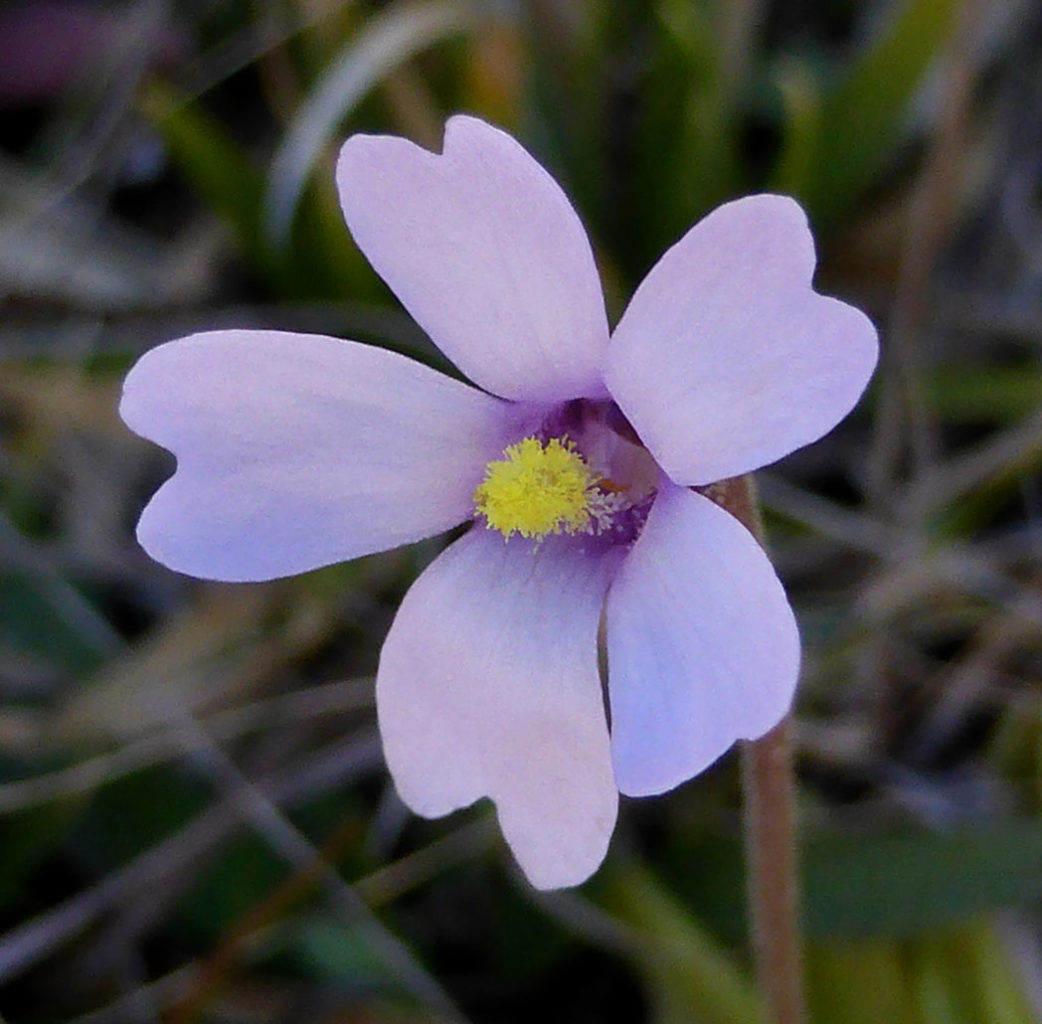
Pictured above: Violet butterwort (Pinguicula ionantha) by Eleanor Dietrich. Click on terms for botanical definitions. View post as a PDF.
Also known as Godfrey’s butterwort, Violet butterwort (Pinguicula ionantha) is a rare perennial insectivorous plant that typically blooms between February and April. It is endemic to only Bay, Franklin, Gulf, Liberty and Wakulla counties in the Florida Panhandle, and occurs naturally in wet prairies, bogs, seepage slopes and wet pine flatwoods. It is a state-endangered and U.S.-threatened species. Threats to this plant include fire exclusion, drought and habitat loss.
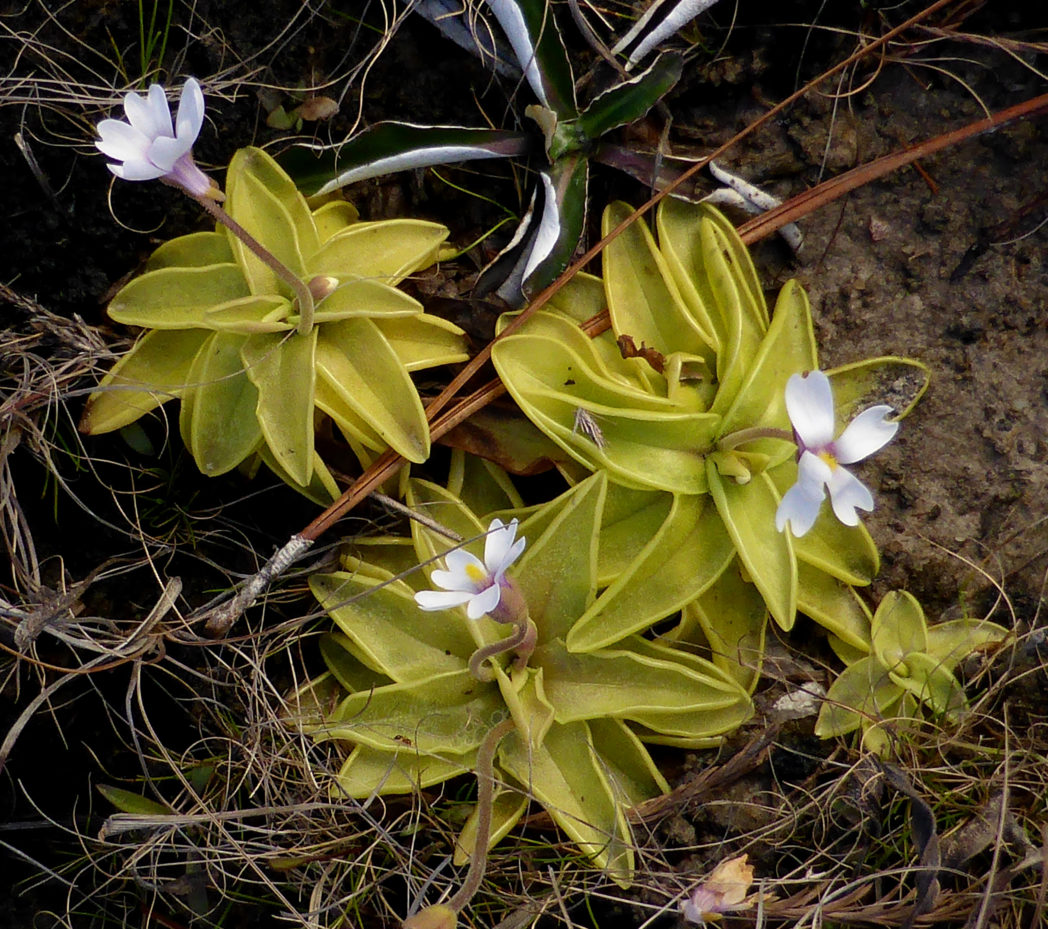
Photo by Eleanor Dietrich
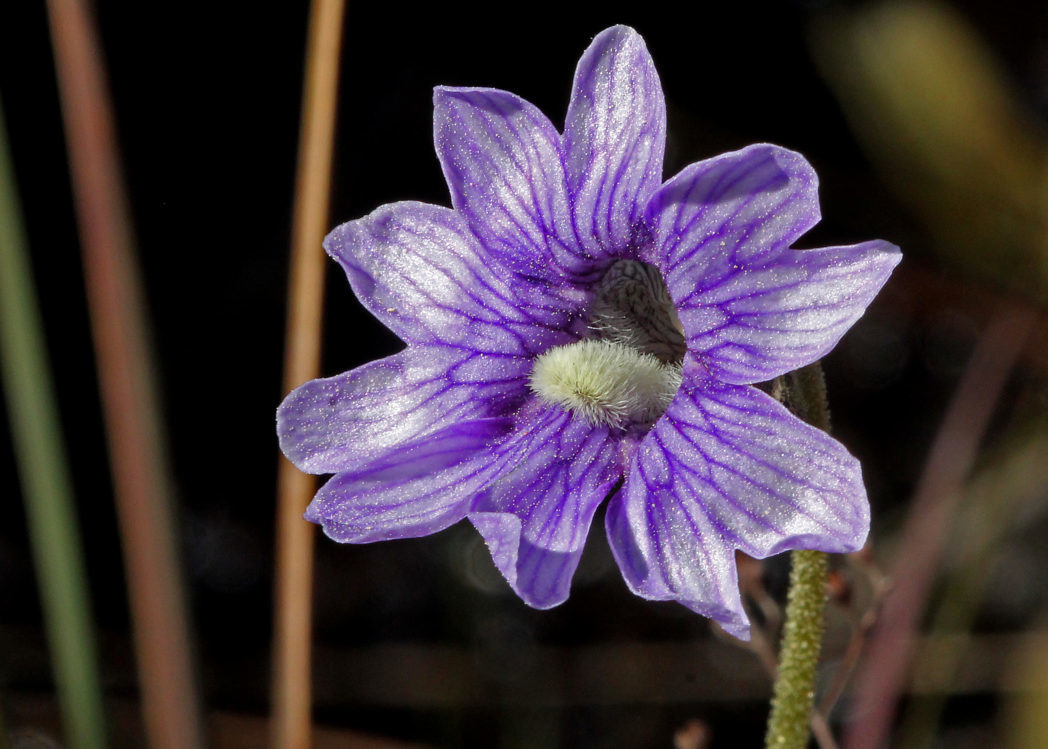
Violet butterwort’s solitary bloom may be pale violet to nearly white with five notched petals. The corolla is slightly tubular with a deep violet throat and violet veination. It is borne on an erect leafless scape that arises from a basal rosette of succulent yellowish-green leaves. Leaf margins are entire and involute. The scape, sepals and leaves are covered in tiny hairs. The hairs on the leaf surface secrete a sticky mucilage in which insects become trapped. (Insects often mistake the mucilage for drops of water.) Enzymes are then secreted to help the plant digest the insects. The ability to trap and digest insects allows violet butterwort (like most insectivorous plants) to survive in nutrient-deficient conditions. Subsequently, it helps prevent insect predation.
The genus name, Pinguicula, comes from the Latin pinguis, which means “fat” and alludes to the greasy feeling of the leaf surface. The species epithet, ionantha, references the Latin word ianthinus, or “violet.”
Family: Lentibulariaceae (Bladderwort family)
Native range: Central and Eastern Panhandle
To see where natural populations of violet butterwort have been vouchered, visit www.florida.plantatlas.usf.edu
Lifespan: Perennial
Soil: Moist to inundated, acidic soils with poor nutrients
Exposure: Full sun
Growth habit: About 6” tall
Carnivorous plants have very specific habitat requirements and as such are not suited for use in urban native plant gardens. However, many Florida native carnivorous plants can be purchased from online retailers. Always be certain that retailers are certified by their state agriculture department, who inspect and ensure proper origin of plants.
For information on other Pinguicula species, see: