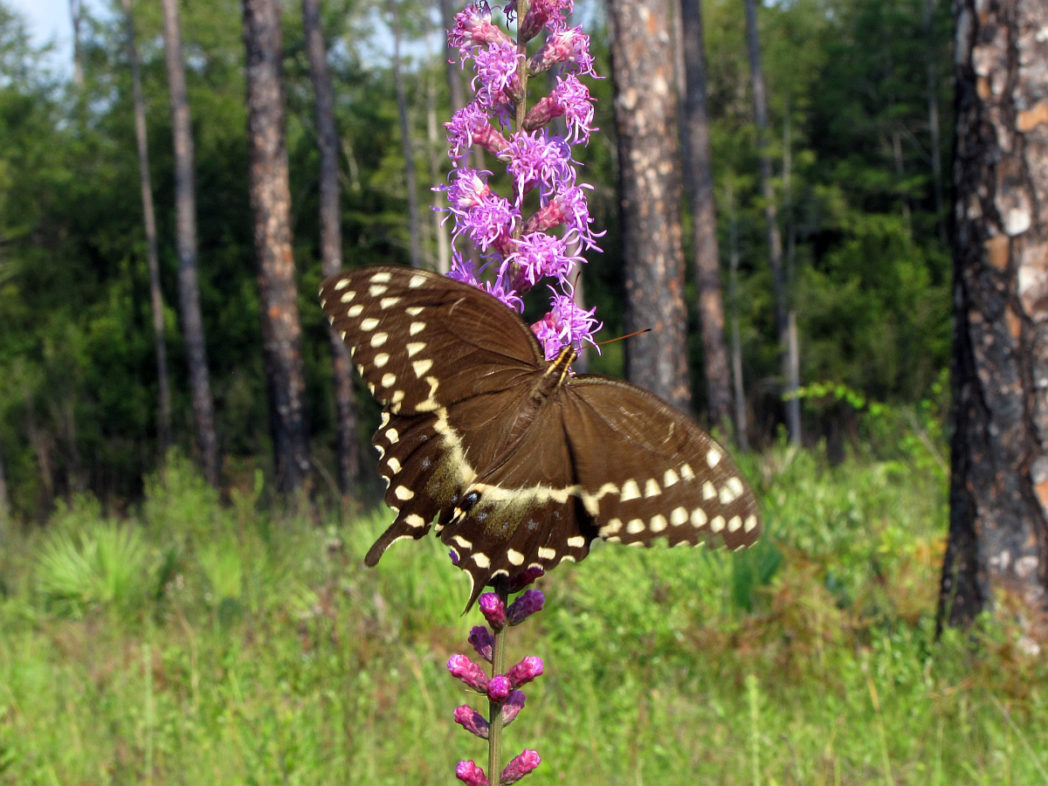
Dense blazing star
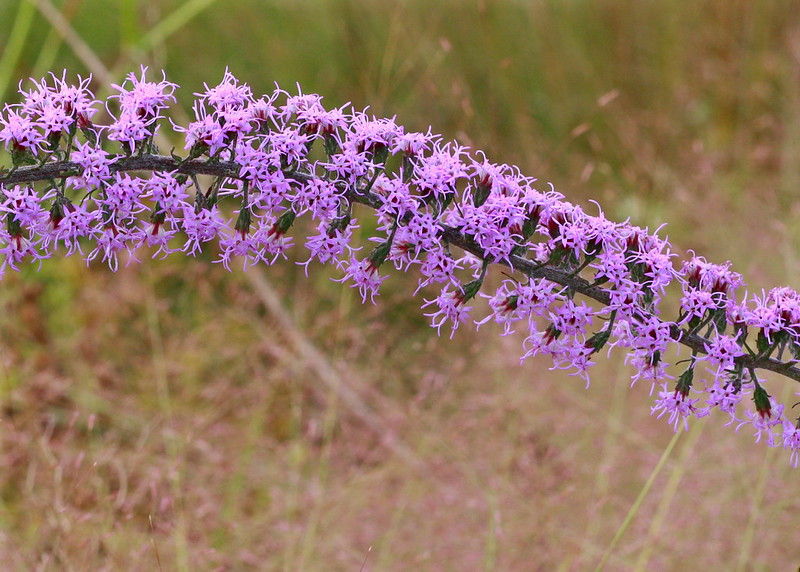
Pictured above: A Palamedes swallowtail nectars on Dense blazing star (Liatris spicata). Photo by Jeff Norcini. Click on terms for botanical definitions. View post as a PDF.
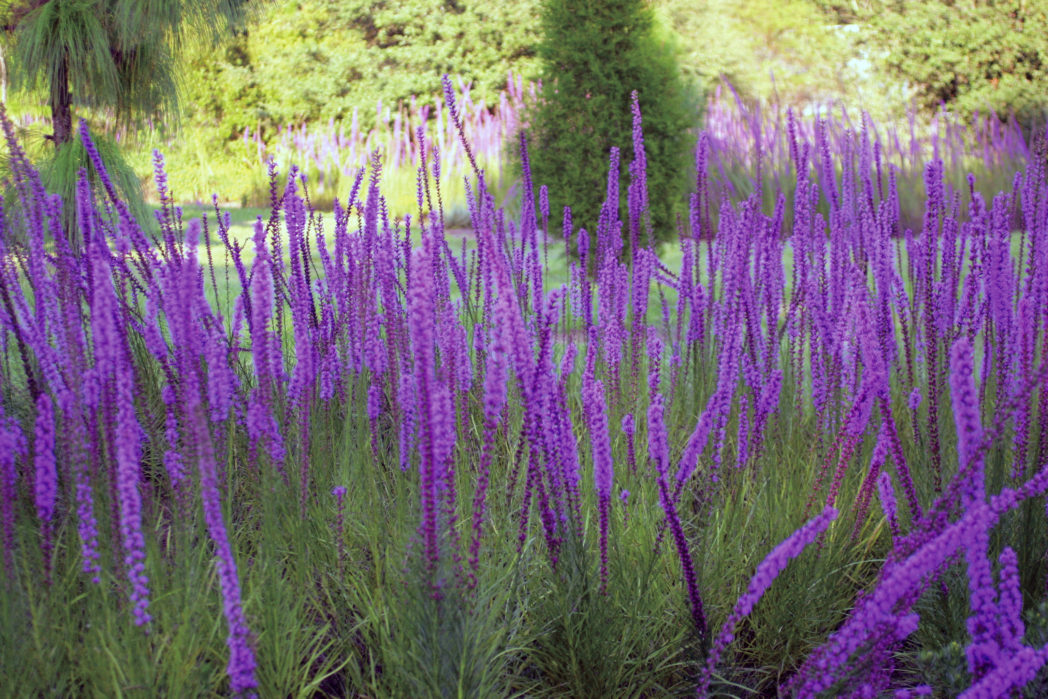
Known also as Marsh blazing star and Spiked blazing star, Dense blazing star is an erect herbaceous perennial with striking spikes of purple flowers. It occurs naturally in mesic to wet flatwoods, seepage slopes, bogs, savannas and roadside ditches. It blooms in late summer through fall and is an excellent attractor of butterflies, bees and other beneficial insects.
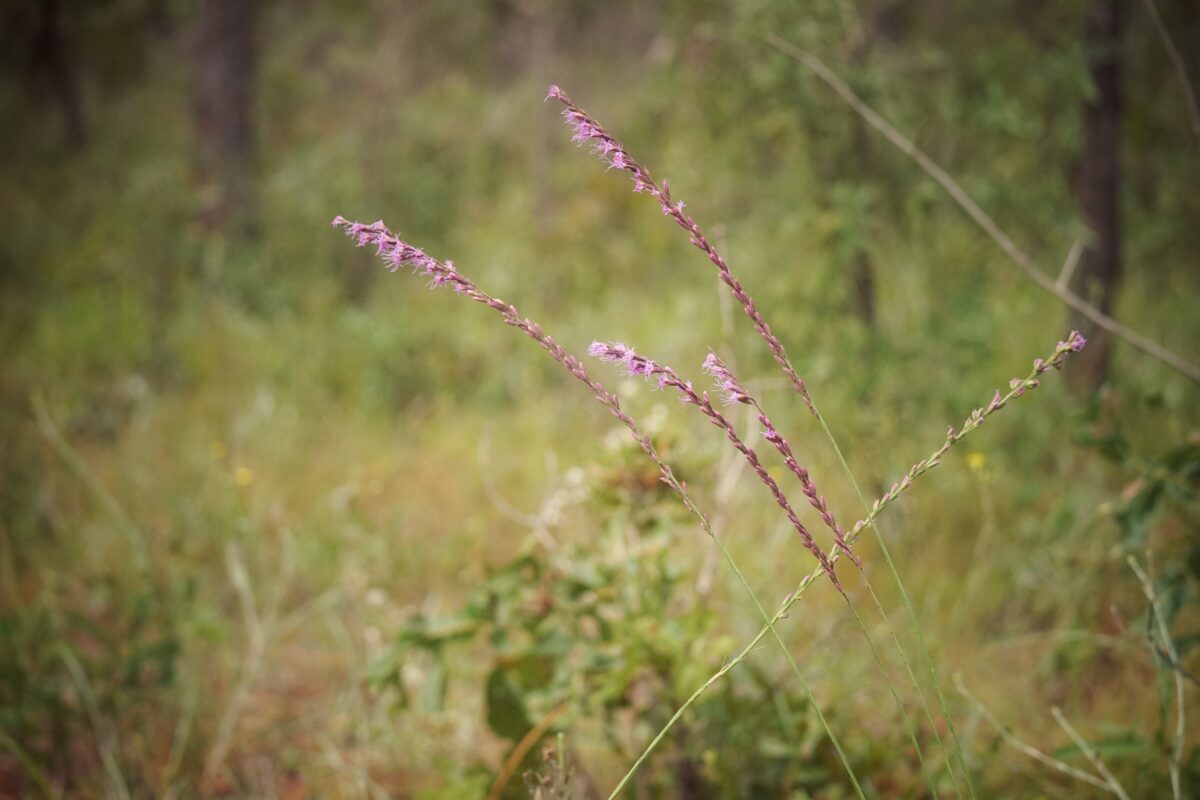
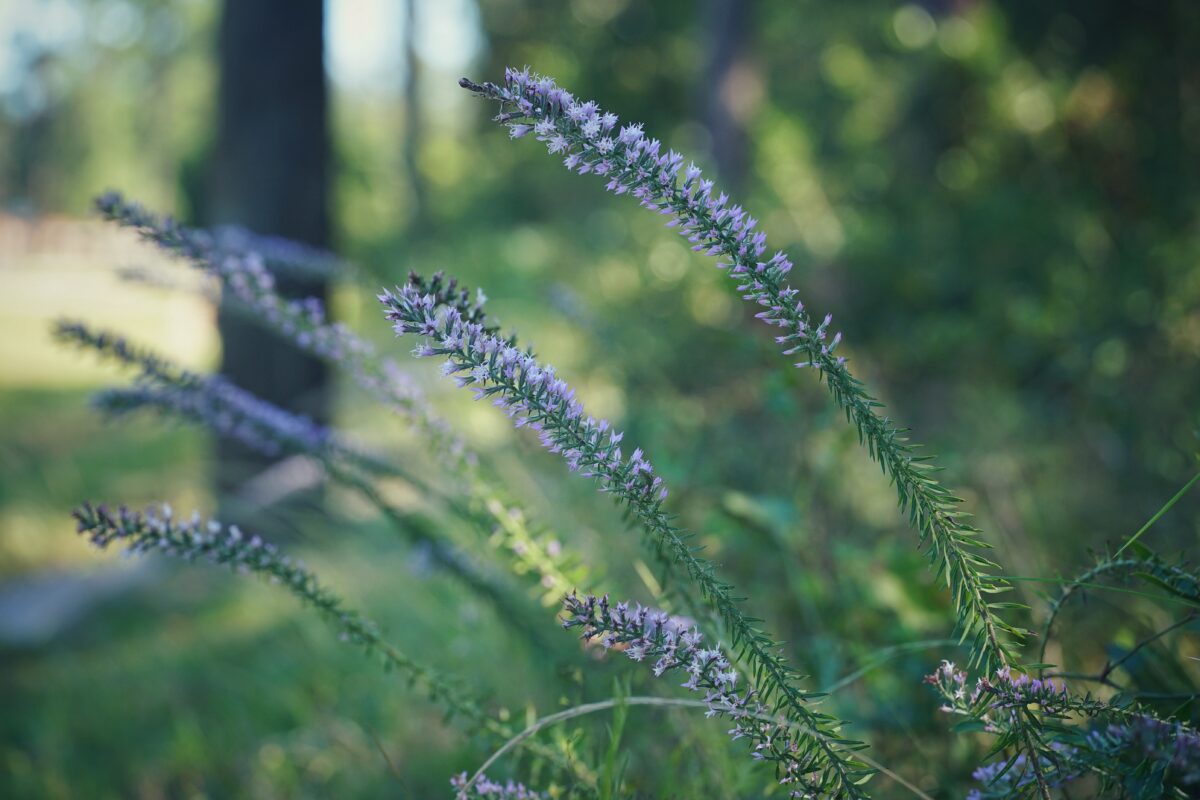
Dense blazing star begins as a basal rosette of linear, grasslike leaves. Flower stalks and buds appear in summer. Once all the buds have formed, the blooms open from the top of the flower stalk down. Flowering spikes are slender, elongated (up to 2 feet long) and, as the common name suggests, dense with flowers. Individual flowers are tubular, rayless and without pedicels. Styles are extended and often slightly twisted. Stems are smooth and unbranched. Stem leaves are linear and alternately arranged. Fruits are tiny, inconspicuous achenes.
The species epithet, spicata, is from the Latin spicatus, meaning “bearing or resembling a spike.”
Family: Asteraceae (Aster, composite or daisy family)
Native range: Nearly throughout
To see where natural populations of Dense blazing star have been vouchered, visit florida.plantatlas.usf.edu.
Lifespan: Perennial
Soil: Moist to moderately dry, well-drained sandy soils
Exposure: Full sun to minimal (high pine) shade
Growth habit: 1–5’ tall
Propagation: Seed, division of corms
Florida regions of landscape suitability: North, Central, South
Garden tips: Dense blazing star is easy to grow and, once established, requires little maintenance. It will die back in the winter, but will persist through prolific self-seeding and by production of new underground corms. Because of its somewhat brief flowering period (typically 2–3 weeks), it is best used in a mixed planting, although it is also quite attractive in a mass planting. The flower spikes can make the plant top-heavy, so plant with other tall species, such as grasses, goldenrods and sunflowers that can help support the plant and keep it upright.
Dense blazing star seeds may be available from the Florida Wildflower Cooperative. Plants are often available from nurseries that specialize in Florida native plants. Visit www.PlantRealFlorida.org to find a nursery in your area.
Learn more about Dense blazing star from the Florida Native Plant Society and the Institute for Regional Conservation.
For information on other Liatris species, see these resources: