
Virginia willow
Virginia willow (Itea virginica) by Keith Bradley. Click on terms for botanical definitions. View post as a PDF.
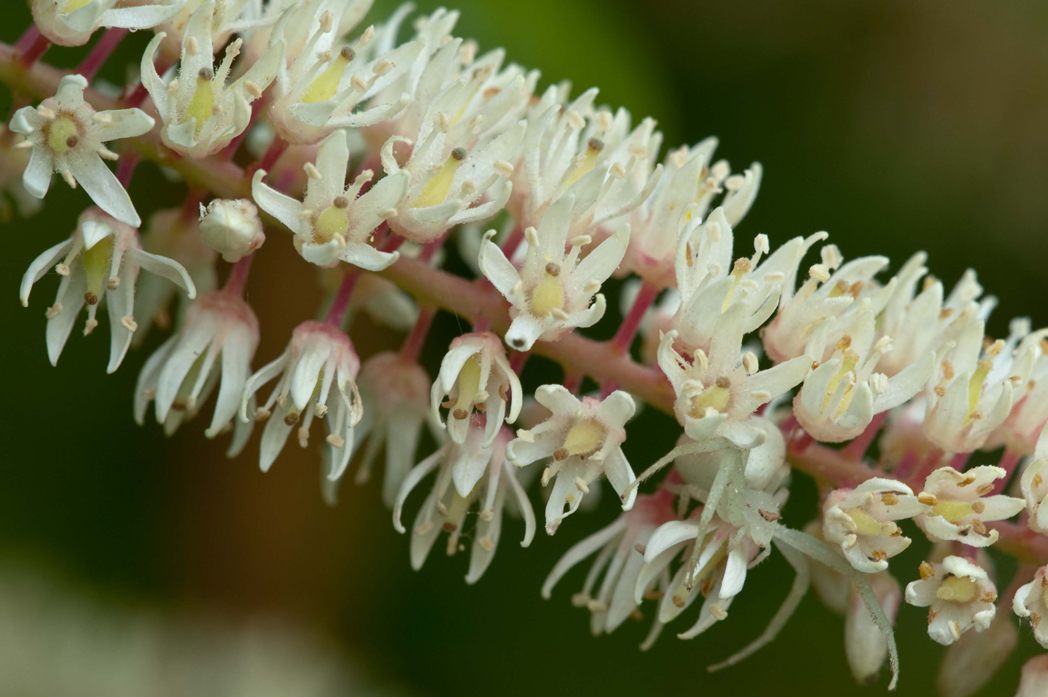
Virginia willow (Itea virginica) is an erect to spreading shrub with showy spikes of tiny white flowers that bloom in late winter through early summer. It occurs naturally in floodplain swamps, seepage slopes, stream and lake edges, and calcareous and mesic hammocks. The plant provides food and cover for wildlife.
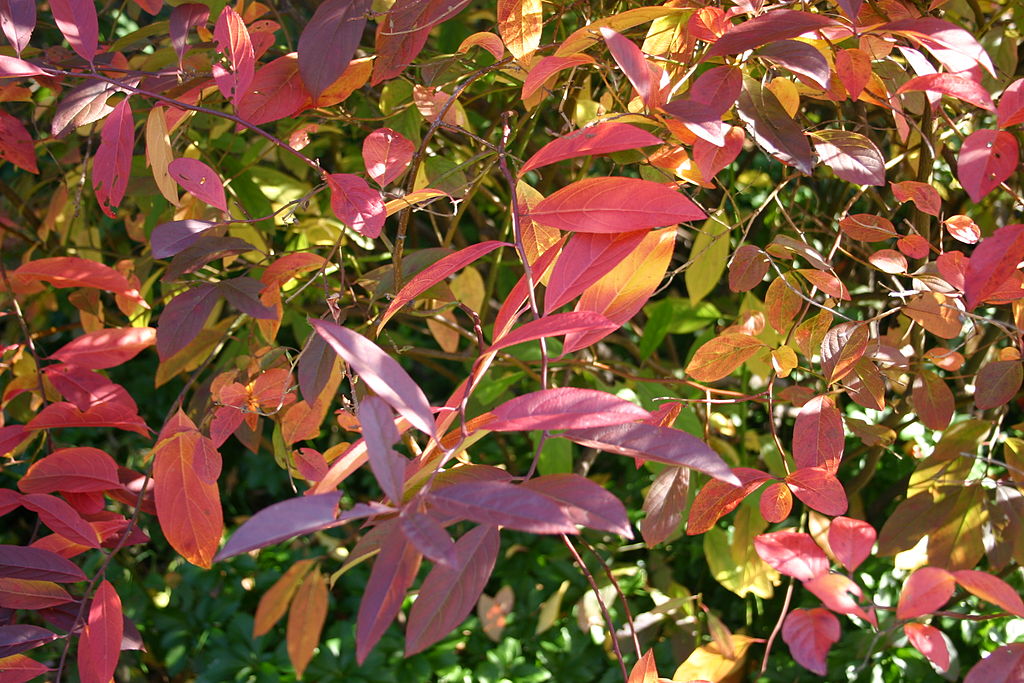
The inflorescence is a dense terminal spike-like raceme that droops downward. Individual flowers are star-shaped, with five white to pinkish petals and a five-lobed, cup-shaped calyx. Stamens are creamy white with pale pinkish anthers. Ovary and pistil are prominent. The dark green, leathery leaves are elliptic to obovate with finely toothed margins and pointed tips. They are petiolate and alternately arranged. In the fall, leaf color changes to orange, red, burgundy or purple. Plants generally become deciduous in Central and North Florida, remaining evergreen in South Florida. Branches are slender and arching. Seeds are born in inconspicuous, pubescent brown capsules.
Despite its common name, Virginia willow is not a true willow, which are members of the Salix genus in the Salicaceae family. It is also known as Sweetspire and Tassel-white.
Family: Iteaceae (Sweetspire family)
Native range: Nearly throughout, less in southernmost counties
To see where natural populations of Virginia willow have been vouchered, visit florida.plantatlas.usf.edu.
Lifespan: Perennial
Soil: Moist to wet, poor to well-drained, acidic sandy, loamy or clay soils
Exposure: Partial shade, but can sometimes tolerate full sun
Growth habit: 3–8′ tall with spread of up to 6′
Propagation: Cuttings, seed
Florida regions of landscape suitability: North, Central, South
Garden tips: Virginia willow makes a lovely dense shrub and can provide year-round interest due to its attractive flowers, long bloom period, and fall color. Use it in mass or edge plantings, in naturalistic or restoration landscapes, and along retention ponds, streams, and other riparian zones where its suckering habit may help stabilize soil.
Virginia willow is available from nurseries that specialize in Florida native plants. Visit www.PlantRealFlorida.org to find a nursery in your area.
Learn more about Virginia willow from the Florida Native Plant Society and the Institute for Regional Conservation.