
Beach verbena
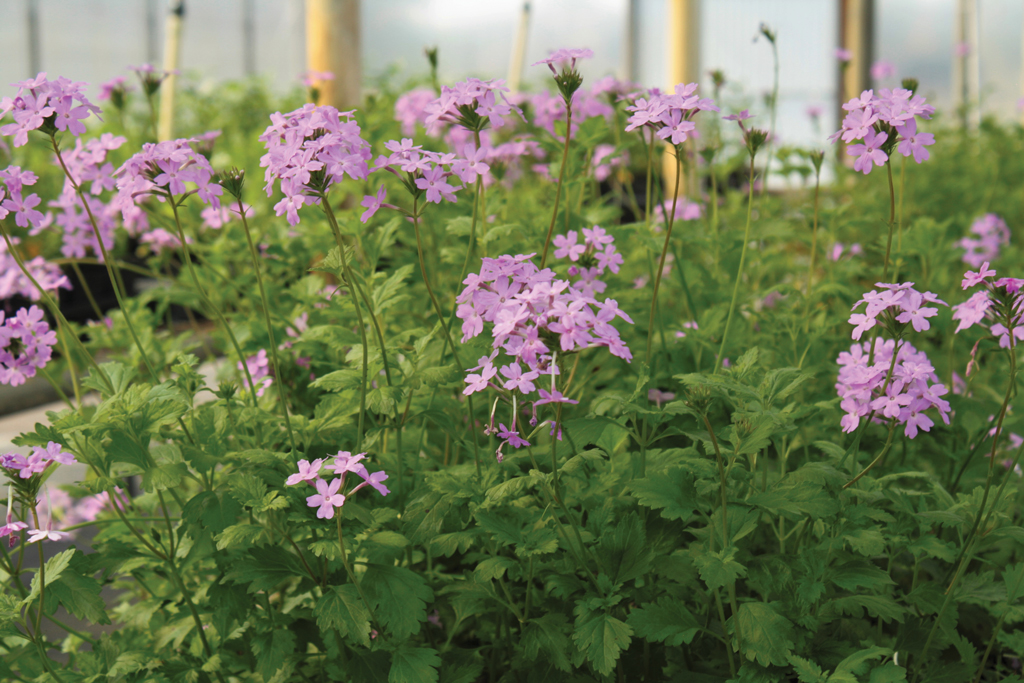
Pictured above: Beach verbena (Glandularia maritima) by Andrea England. Click on terms for botanical definitions. View post as a PDF.
Also known as Coastal mock vervain, Beach verbena (Glandularia maritima) is a short-lived perennial wildflower endemic primarily to Florida’s east coast. This state-listed endangered species blooms year-round, although the most prolific flowering occurs in spring and summer. Beach verbena flowers are a good nectar source for a variety of butterflies and moths, including Gulf fritillaries, hawkmoths and Long-tailed skippers. They are also attractive to miner bees and long-tongued bees such as bumble and orchid bees.
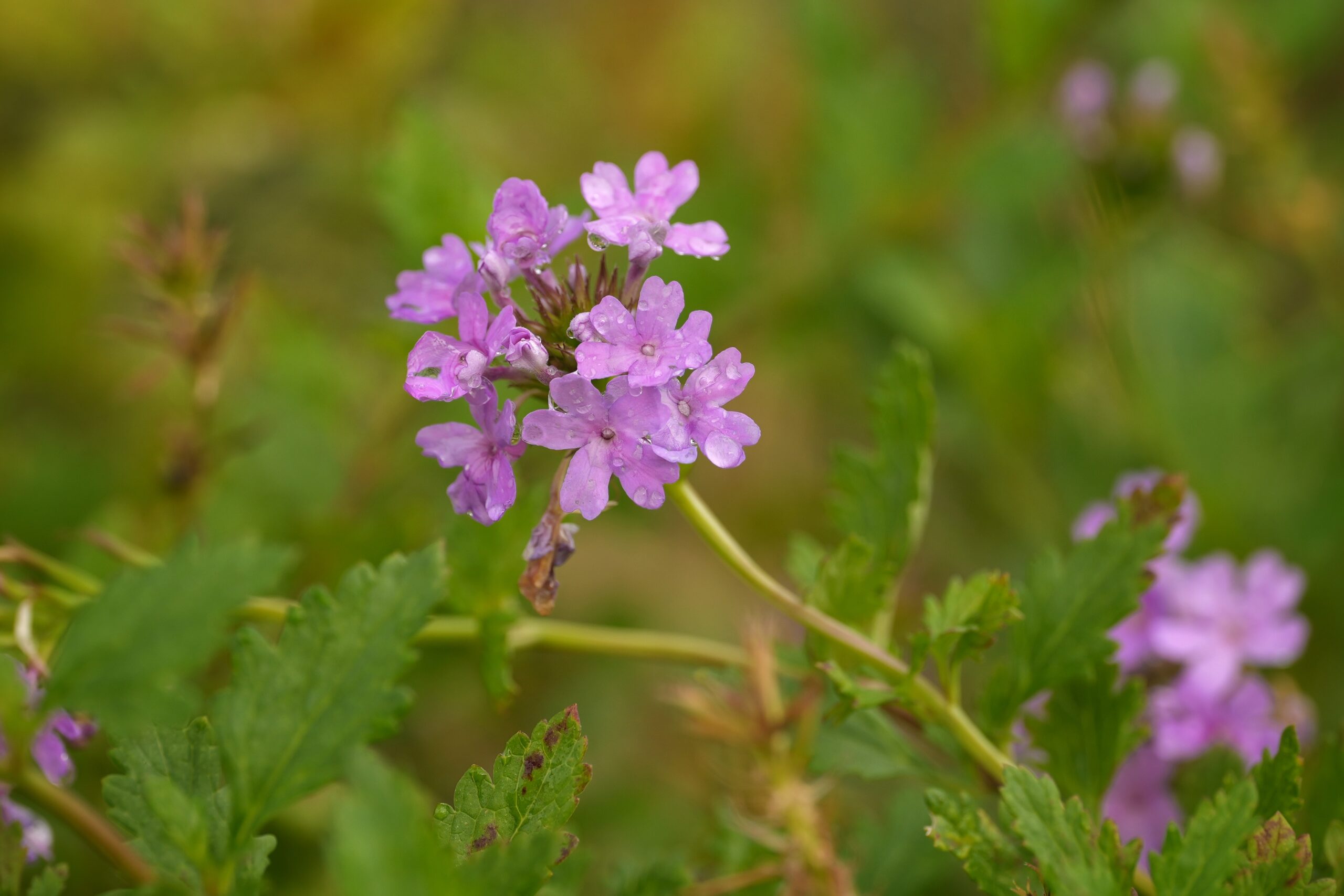
Photo by Emily Bell
Beach verbena’s deep pink to lavender flowers are five-lobed and born in flat-topped terminal clusters. Leaves are dark green, glossy, and ovate to rhombic with deeply toothed or lobed margins. They are oppositely arranged. Stems have tiny hairs and are angled and generally prostrate. They will drop roots as they spread. Seeds are born in an inconspicuous nutlet.
Family: Verbenaceae (Verbena or vervain family)
Native range: East coast of peninsula from St. Johns to Monroe counties, Collier, Hendry and Levy counties
To see where natural populations of Beach verbena have been vouchered, visit florida.plantatlas.usf.edu.
Lifespan: Perennial
Soil: Dry, well-drained, acidic or alkaline clay, loamy, or sandy soils that are nutrient poor
Exposure: Full sun
Growth habit: 8–12” tall, 2’+ spread
Propagation: Cuttings, division, seed
Florida regions of landscape suitability: North and Central (east coast), South
Garden tips: Use Beach verbena as a low groundcover in a sunny bed or woodland edge, or in a container or above-ground planter. It is particularly striking when used in masses. When planting, allow enough space for the plants to spread. Try Beach verbena in dry, low-nutrient soils where other plants have trouble growing; do not over-irrigate. The plant is highly adaptable and is tolerant of drought and salty winds.
Caution: There are many non-native verbenas available. Be sure to ask your nursery or supplier for native species. Verbena species may hybridize, so it is important to plant the species found naturally in your area to help preserve the distinct genetic identities and ecological roles of these plants.
Beach verbena is available from nurseries that specialize in Florida native plants. Visit www.PlantRealFlorida.org to find a nursery in your area.
Learn more about Beach verbena from the Florida Native Plant Society and the Institute for Regional Conservation.